Cut a mango without wrecking it
How to tell a mango is ripe by squeeze and smell, and the three-cut method that gets the fruit off the pit in under a minute.
eric has done this
The moment
Mangoes are in the cart maybe twice a year, because the last one involved a cutting board, a slippery pit, and a result that looked chewed. So you buy grapes instead. Meanwhile mangoes are the single best snack fruit a kid will eat without negotiation.
Two things are in the way: knowing when it's ripe, and the pit.
What you need
- A ripe mango — see step 1. Ataulfo (the small yellow ones) are sweeter and have a thinner pit than the big red-green Tommy Atkins.
- A sharp paring or chef's knife.
- A drinking glass — optional, but the easiest peeling trick there is.
Do this
- Check ripeness by squeeze and smell, not color. A ripe mango gives slightly under your thumb like a peach, and smells sweet at the stem end. Red skin means nothing. If it's rock hard, leave it on the counter two days.
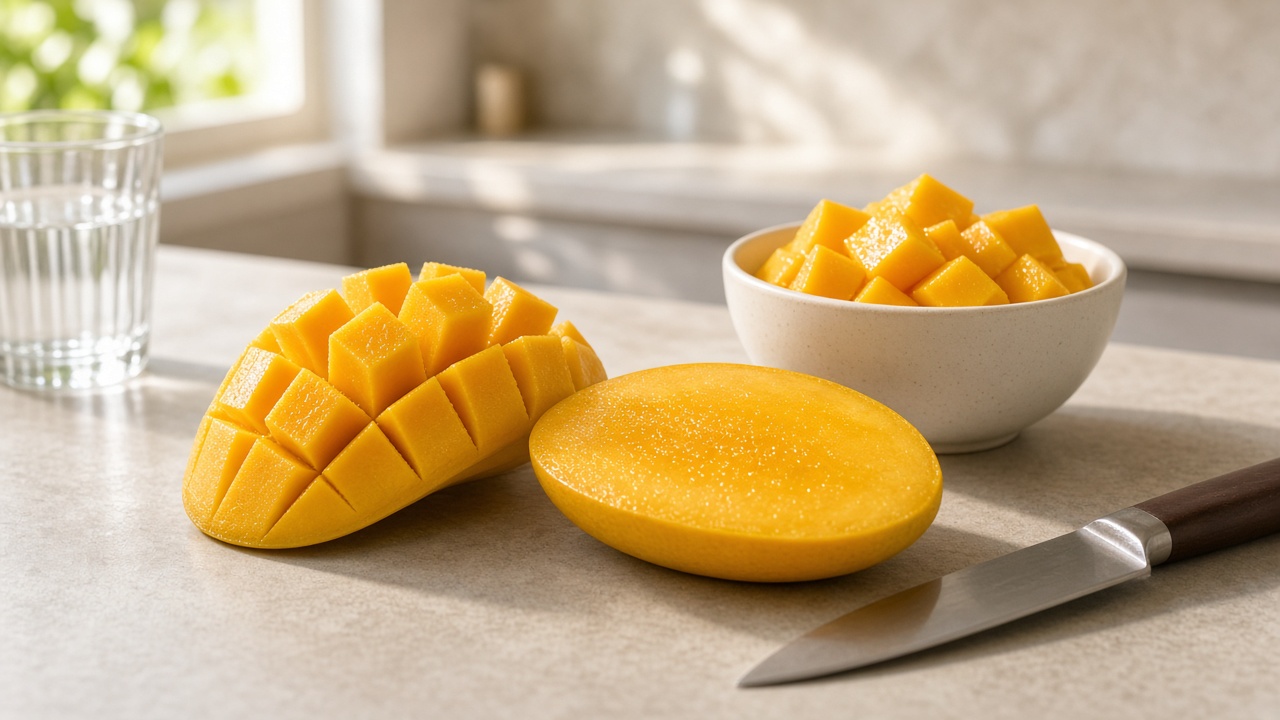
- Stand the mango on its end, stem up. The pit is a flat oval running vertically, wider than you think.
- Slice down about a quarter-inch off the center line — you should just miss the pit. Repeat on the other side. You now have two 'cheeks.'
- For cubes: score each cheek in a crosshatch down to the skin, then push the skin inside-out. The cubes pop up as a hedgehog.
- For slices: press the cheek onto the rim of a drinking glass and push down. The skin stays outside, the fruit falls in.
- Trim the two thin strips of fruit still on the pit — cook's treat, eat them over the sink.
What changes
A bowl of mango in under a minute per fruit, with almost nothing left on the pit. You'll know you picked right if it's sweet at the stem end, not sour — that's the part that ripens last.